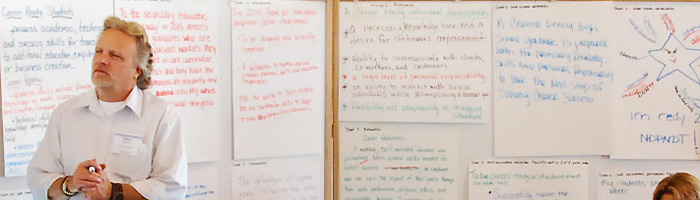
Shift Papers & Synthesis
In the last round of work for the day, two team synthesized the work from previous rounds, and eight teams identified the key shifts that need to take place to drive "career readiness" from a variety of different stakeholder perspectives.
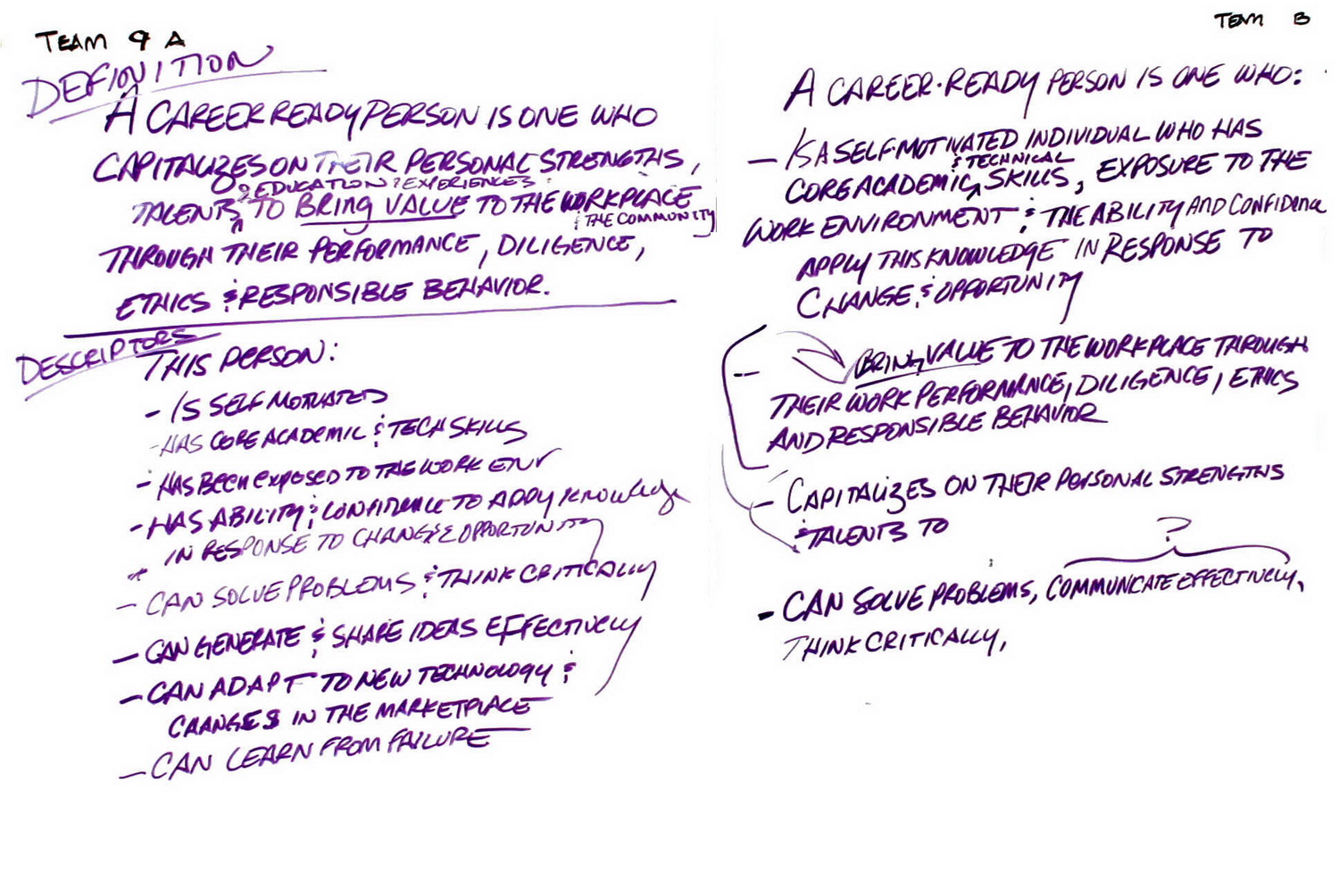
Team Nine - Synthesis of Definitions
Context |
Your group is tasked to synthesize the work produced in the last round, and produce a single definition of what we mean by career ready. |
Objective |
The objective of this round of work is to produce a draft of a 2015 definition of what we, the State of Nebraska, mean when we say career ready. Since you have only 45 minutes, you should consider this a first draft synthesis. Your group has been provided the posters developed in the last round with definitions from six different perspectives. Use these, and the white walls, to brainstorm elements of your definition. |


Report Out -
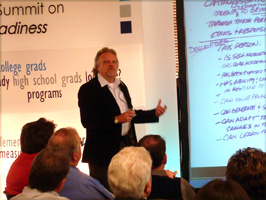
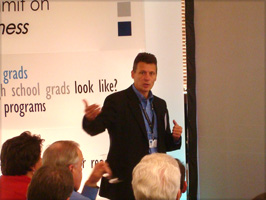
Since this room is filled with academics there is a tendency to use academic language, which creates problems when you try to communicate with the outside world. As a marketing guy, I pushed our group to focus on the deliverables of our system. We built a two-tiered definition.
A career-ready person is one who capitalizes on their personal strengths, talents, education and experiences to bring value to the workplace and their community.
This is a person who is self-motivated, has core skills, responds to change and opportunity, can solve problems, can generate and share ideas effectively, can adapt to new technology and can learn from failure.
This definition also defines how all of the different stakeholders can play together in the system. It describes what the educational experience should be like.
Team Ten - Synthesis of Knowledge of Skills
Context |
Your group is asked to synthesize the work produced earlier today to produce a set of knowledge and skills that help us define what we mean by “college and career ready.” |
Objective |
The objective of this round of work is to produce a draft list of knowledge and skills elements that help us define what we mean by college and career ready (by 2015). Your group has been provided photographs of the work developed earlier with characteristics of a college and career ready person. You have also been provided an example from the States of Nebraska and Colorado of how they define college and career ready. Use these, and the white walls, to brainstorm elements of your list. |
Report Out -
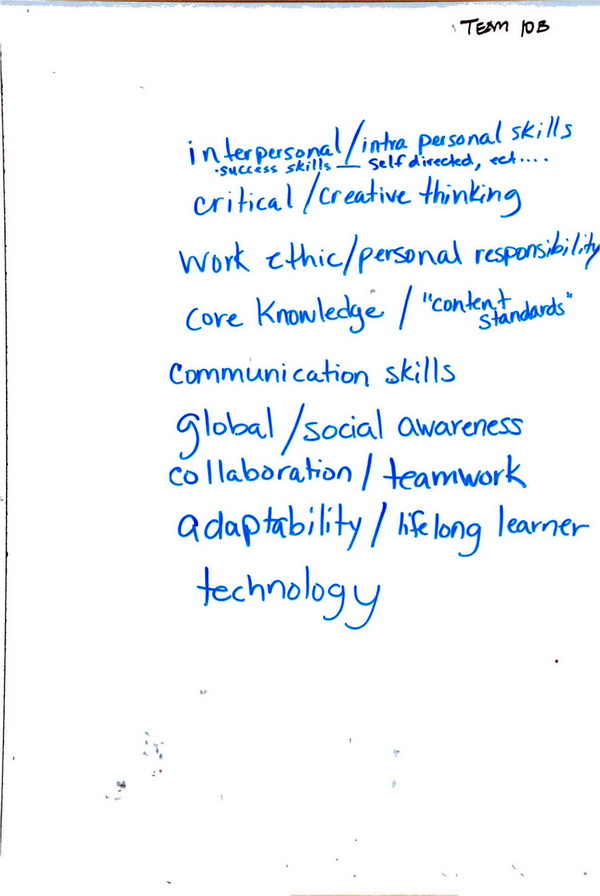
We identified a basic list of concepts, and had a great discussion about the detail underneath each of these concepts (which was not captured on our boards).
The education path is 13 or 17 years' of these young people's lives. Our conversations in the world of education, however, tend to be with other people from academics. We go from classroom to classroom to classroom, and then back to the classroom as teachers.
We need to work closely with the business world to identify what and how we need to be teaching. We need to identify a number of things on the transcripts besides A's, B's and C's. We need to explore these issues in more depth.
Context |
This activity is focused on identifying specific shifts that need to take place by 2015 in various organizations, processes, and stakeholder groups. Each group is being given a different perspective. Your group will take the perspective of Businesses. |
Objective |
On the white board panels labeled Part 1, answer the following question: By 2015, what role will business play in a system through which all Nebraskans become career ready? On the white board panel labeled Part 2, create the template shown below to develop a shift paper that answers the question: What are the specific changes needed in business’s participation in getting all Nebraskans career ready? Your shift paper should show the shift that takes place from the “current way (2009)” to the “new way (2015)” for each of at least 10 elements, and indicates specifically what policies, processes, structures, programs, etc. enable this to happen. |
Report Out -
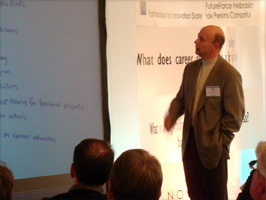
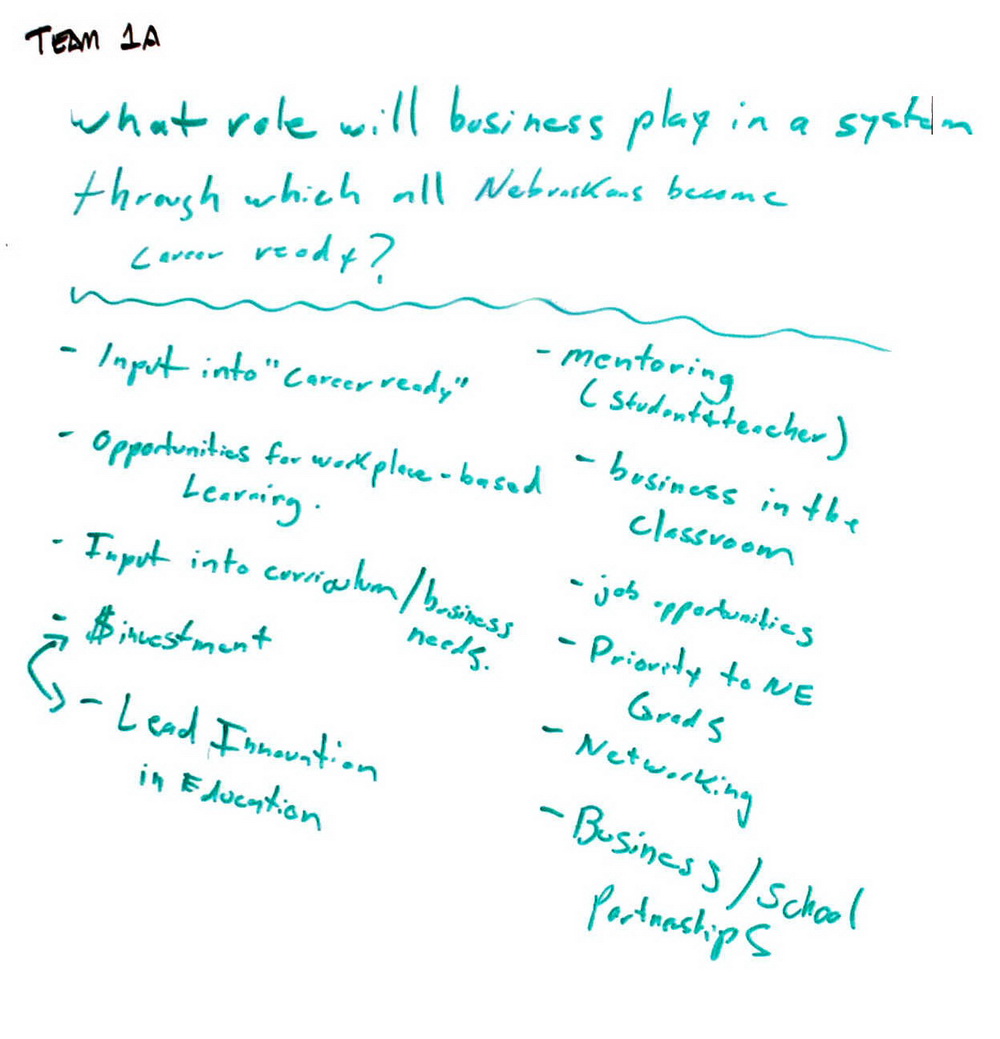
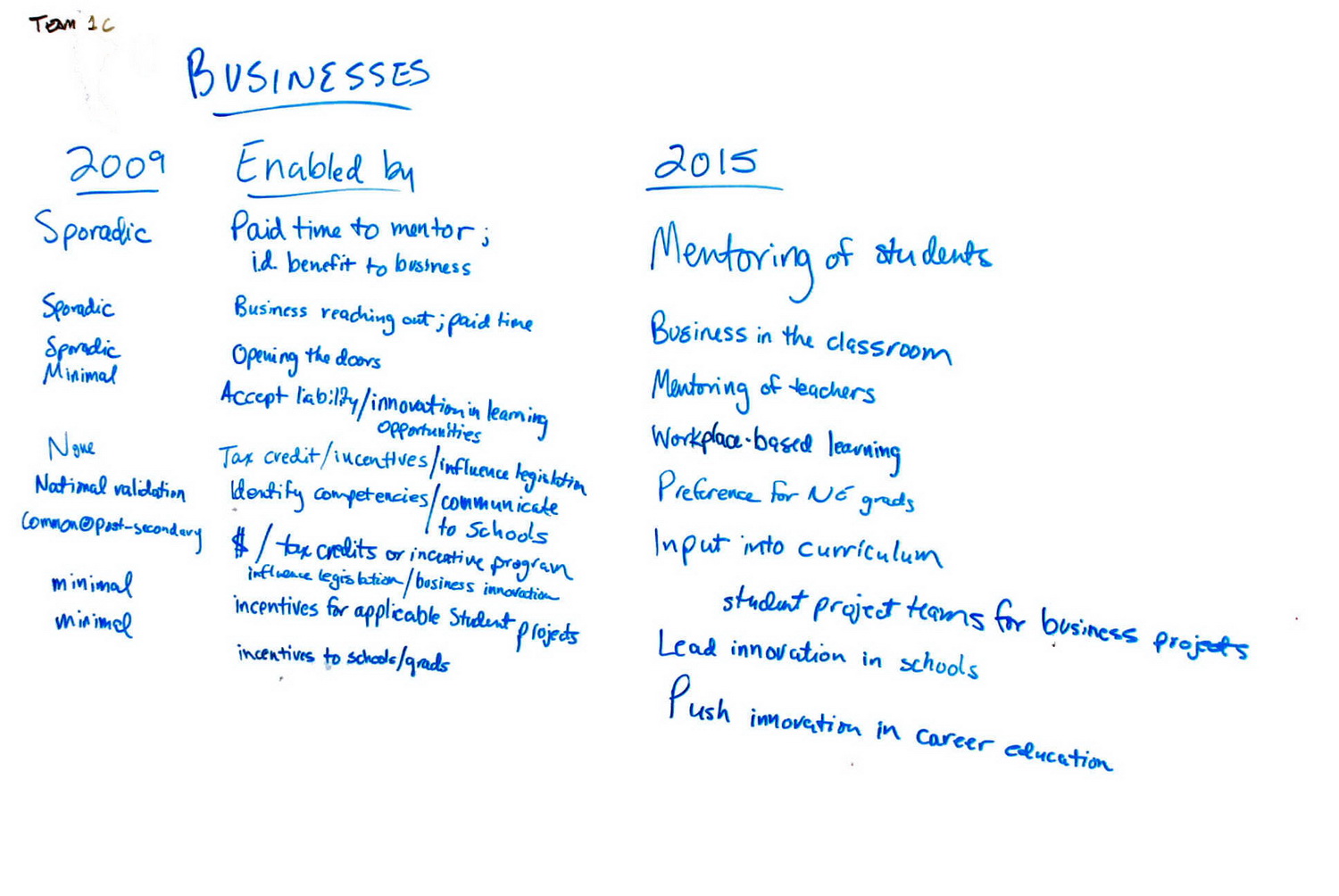
There are a number of changes we'd like to see. Business needs to pay for the time necessary to mentor students. Businesses need to reach out if business is going to be brought into the classroom.
Businesses need to open their doors to mentor teachers in the business world.
Businesses need to accept the liability of having teachers and students onsite for workplace-based learning.
We would like businesses to give a preference for Nebraska-raised employees in hiring - this might be driven by a tax credit.
Student project teams for business projects might be enabled by grants or tax credits. Businesses should offer incentives to students or schools to pursue innovative projects in their industries. Business can offer incentives to push further innovation in career education.
Team Two - High Schools
Context |
This activity is focused on identifying specific shifts that need to take place by 2015 in various organizations, processes, and stakeholder groups. Each group is being given a different perspective. Your group will take the perspective of the High School Experience. |
Objective |
On the white board panels labeled Part 1, answer the following question: By 2015, what changes have to take place in the high school experience for all students to be “college and career ready” by the time they finish? On the white board panel labeled Part 2, create the template shown below to develop a shift paper that answers the question: What are the specific changes needed in the high school experience to enable all Nebraskans to be college and career ready? Your shift paper should show the shift that takes place from the “current way (2009)” to the “new way (2015)” for each of at least 10 elements, and indicates specifically what policies, processes, structures, programs, etc. enable this to happen. |
Report Out -
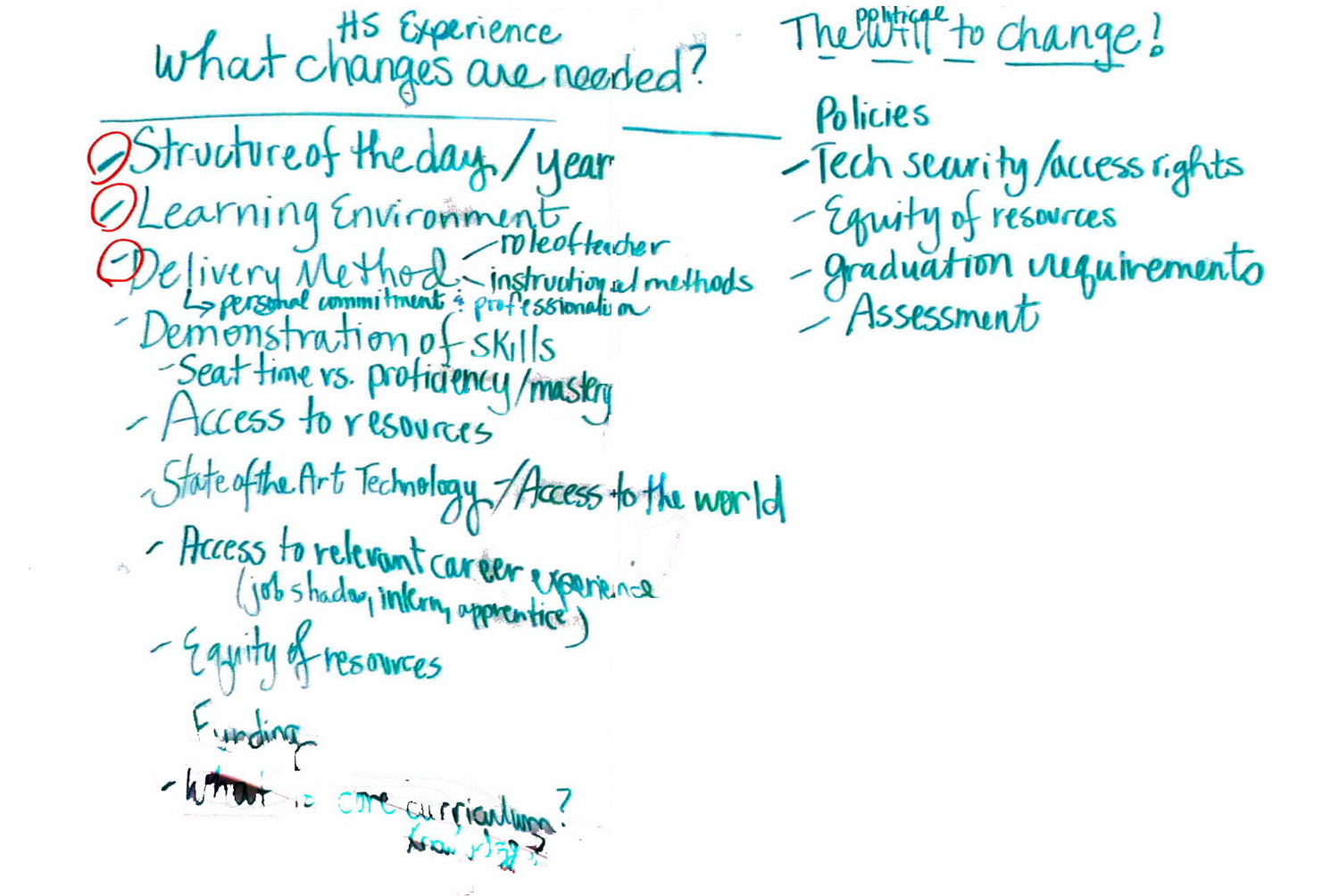
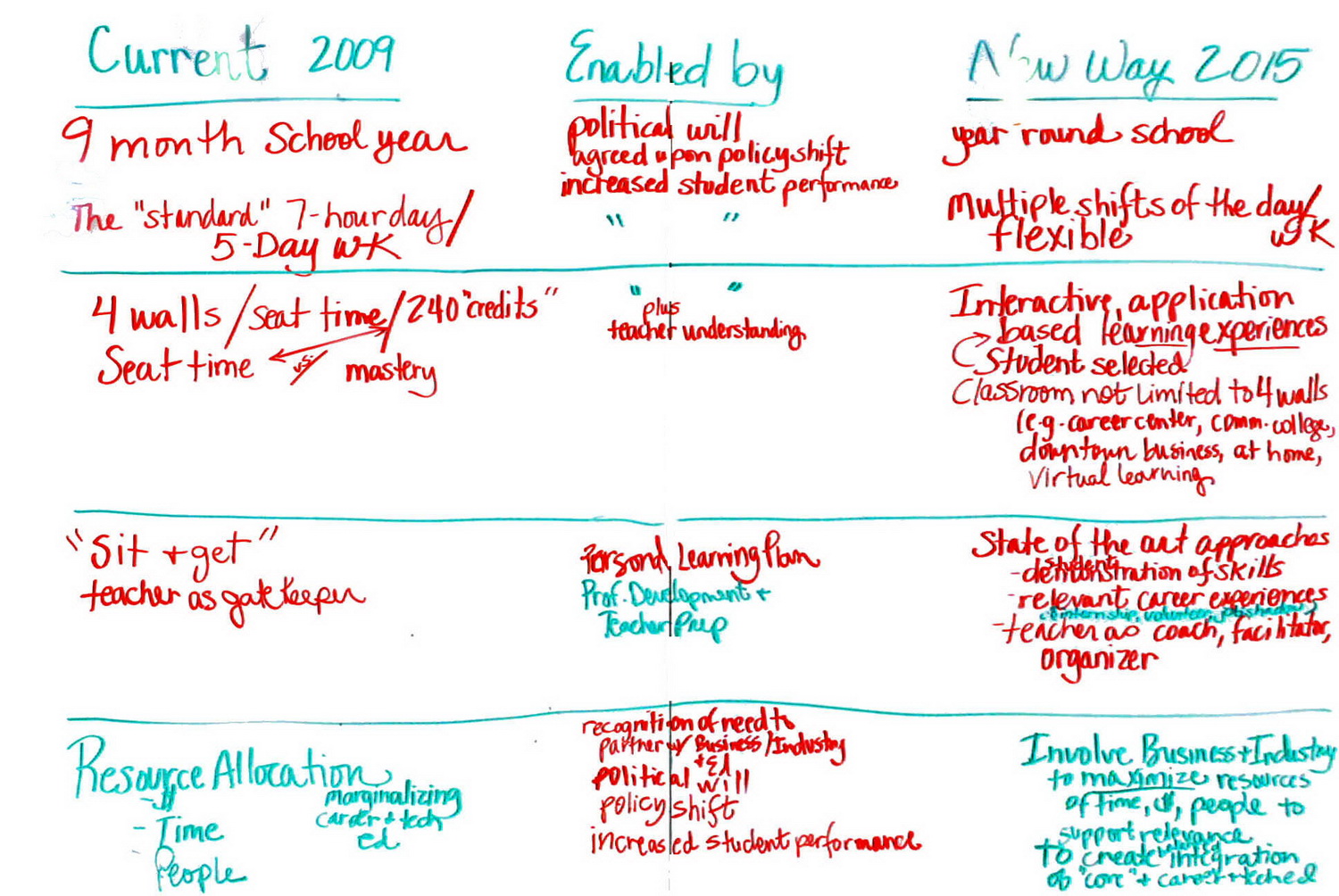
We brainstormed a long list of ideas of things we'd like to see change. We narrowed them to four. We want to shift the traditional 9-month school year to year-round schooling with a multiple-shift model. There needs to be the political will to change this policy - everyone needs to buy into it in order for this large a change to happen.
We want to shift from a seat-time/240-credit model to an interactive, application-based learning-experience model. This requires a big change in teacher understanding. This would allow the "classroom" to expand from the four-walls into the entire community. There are a lot of great programs out there that we need to learn more about. People are already doing some of these things.
We want to shift from the "sit & get"/teacher-as-gatekeeper model to more state of the art approach to instruction and learning. This requires buy-in from all stakeholders and a lot of professional development.
We want to shift from a resource-allocation model to an investment mindset. How can we generate the greatest impact for our children with the dollars we spend? We need to involve business and industry and the entire community. Everyone needs to buy into this approach and will require tremendous political will.
Team Three - Postsecondary Education
Context |
This activity is focused on identifying specific shifts that need to take place by 2015 in various organizations, processes, and stakeholder groups. Each group is being given a different perspective. Your group will take the perspective of Post Secondary Education. |
Objective |
On the white board panels labeled Part 1, answer the following question: By 2015, what role will post secondary education play in an ideal system through which all Nebraskans become career ready? On the white board panel labeled Part 2, create the template shown below to develop a shift paper that answers the question: What are the specific changes needed in post secondary participation in getting all Nebraskans career ready. Your shift paper should show the shift that takes place from the “current way (2009)” to the “new way (2015)” for each of at least 10 elements, and indicates specifically what policies, processes, structures, programs, etc. enable this to happen. |
Report Out -
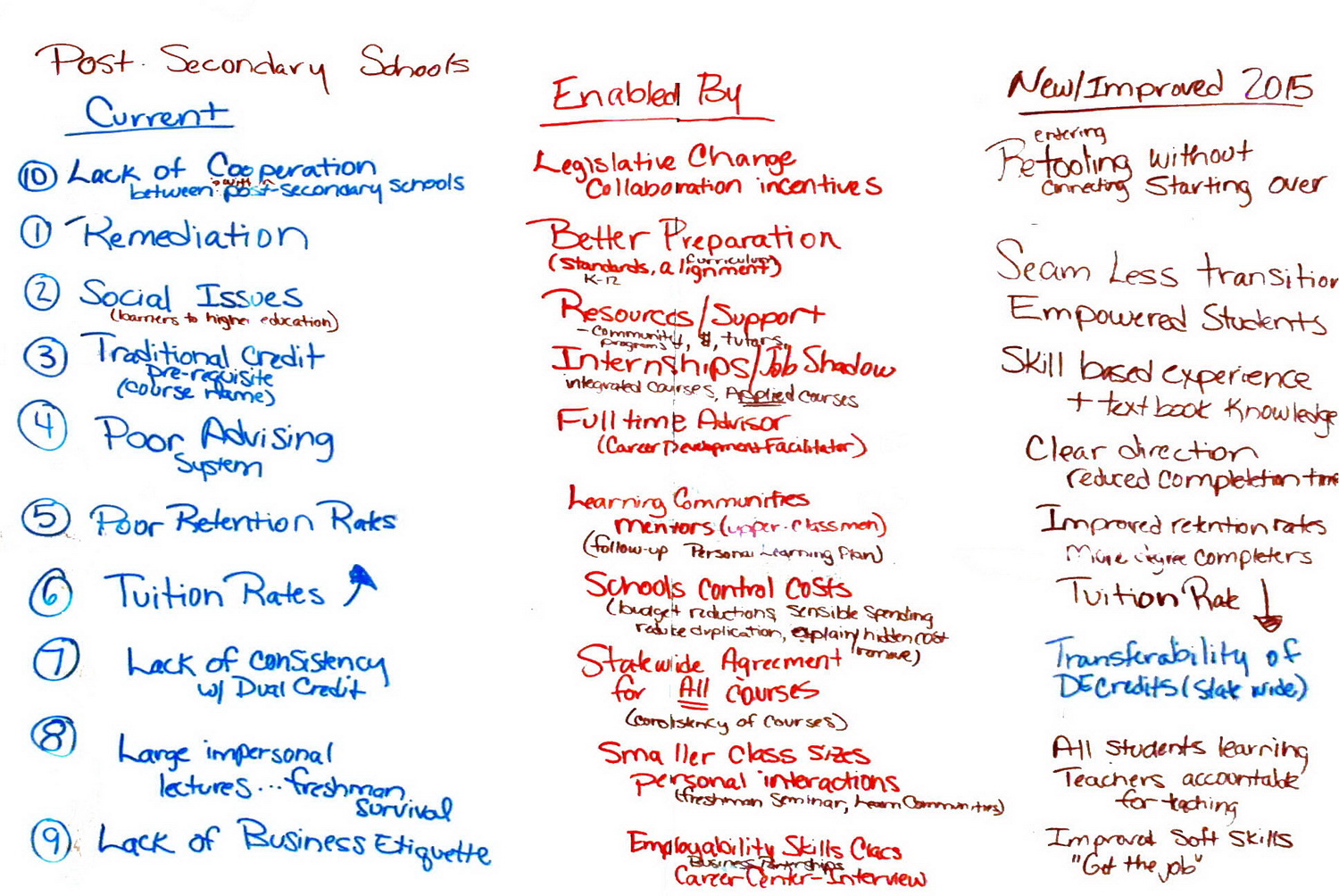
We want to shift away from a remediation model through better preparation. We want to eliminate some of the social obstacles for students by leveraging community resources better. We want to integrate applied learning and textbook knowledge.
We want to improve the career and college advising system. We think that learning communities and mentors will improve our retention rates.
If schools can control their costs, tuition rates can decrease.
There should be a statewide agreement for all courses to improve the transferability of credits.
Smaller class sizes and learning seminars will improve the retention rates for lower classmen.
An employability skills class will improve the soft skills to help students get the jobs they want.
Context |
This activity is focused on identifying specific shifts that need to take place by 2015 in various organizations, processes, and stakeholder groups. Each group is being given a different perspective.
|
Objective |
On the white board panels labeled Part 1, answer the following question: By 2015, what are the key policy changes that need to take place at a government level to enable an ideal system through which all Nebraskans become both college and career ready? On the white board panel labeled Part 2, create the template shown below to develop a shift paper that answers the question: What are the specific changes needed in policies to support all Nebraskans to be both college and career ready.
|
Report Out -
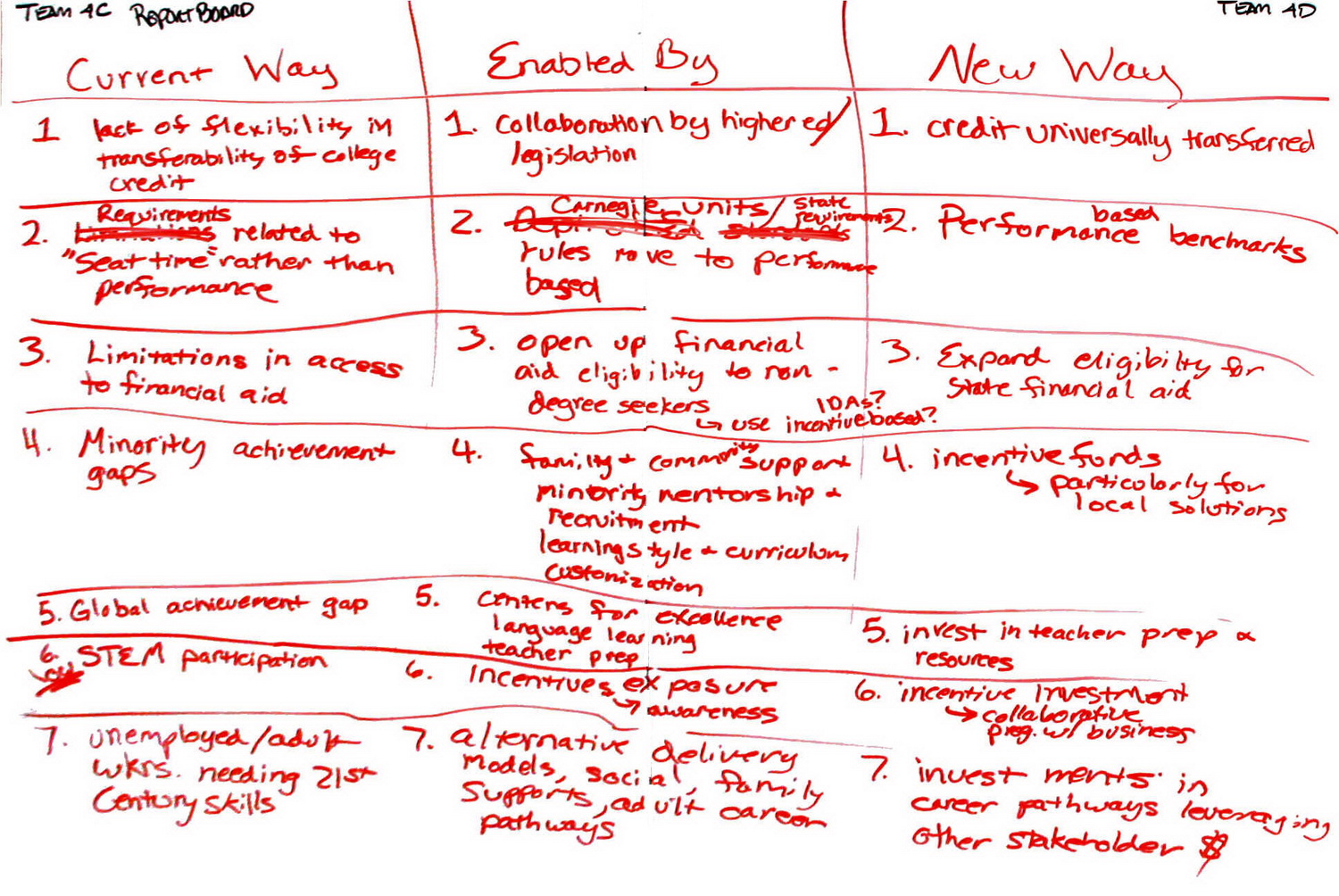
We will encourage legislation to improve the transferability of credits between higher education in the state.
We need to change the policies that focus on "seat time" to focus on performance-based benchmarks.
We want to expand the eligibility for financial aid to non-degree-seekers.
We want to improve community and family supports to reduce the minority achievement gaps.
We need to invest in teacher development to improve our global achievement gaps.
We need to improve our STEM participation through incentive programs.
We need to develop alternative delivery models to help students and adults acquire the 21st century skills that they need.
Team Five - Professional Development
Context |
This activity is focused on identifying specific shifts that need to take place by 2015 in various organizations, processes, and stakeholder groups. Each group is being given a different perspective.
|
Objective |
On the white board panels labeled Part 1, answer the following question: By 2015, what are the key changes that need to take place in professional development for educators to enable an ideal system through which all Nebraskans become both college and career ready? On the white board panel labeled Part 2, create the template shown below to develop a shift paper that answers the question: What are the specific changes needed in professional development to support all Nebraskans to be both college and career ready.
|
Report Out -
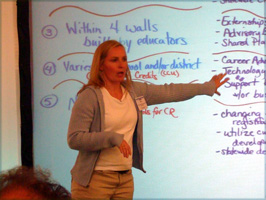
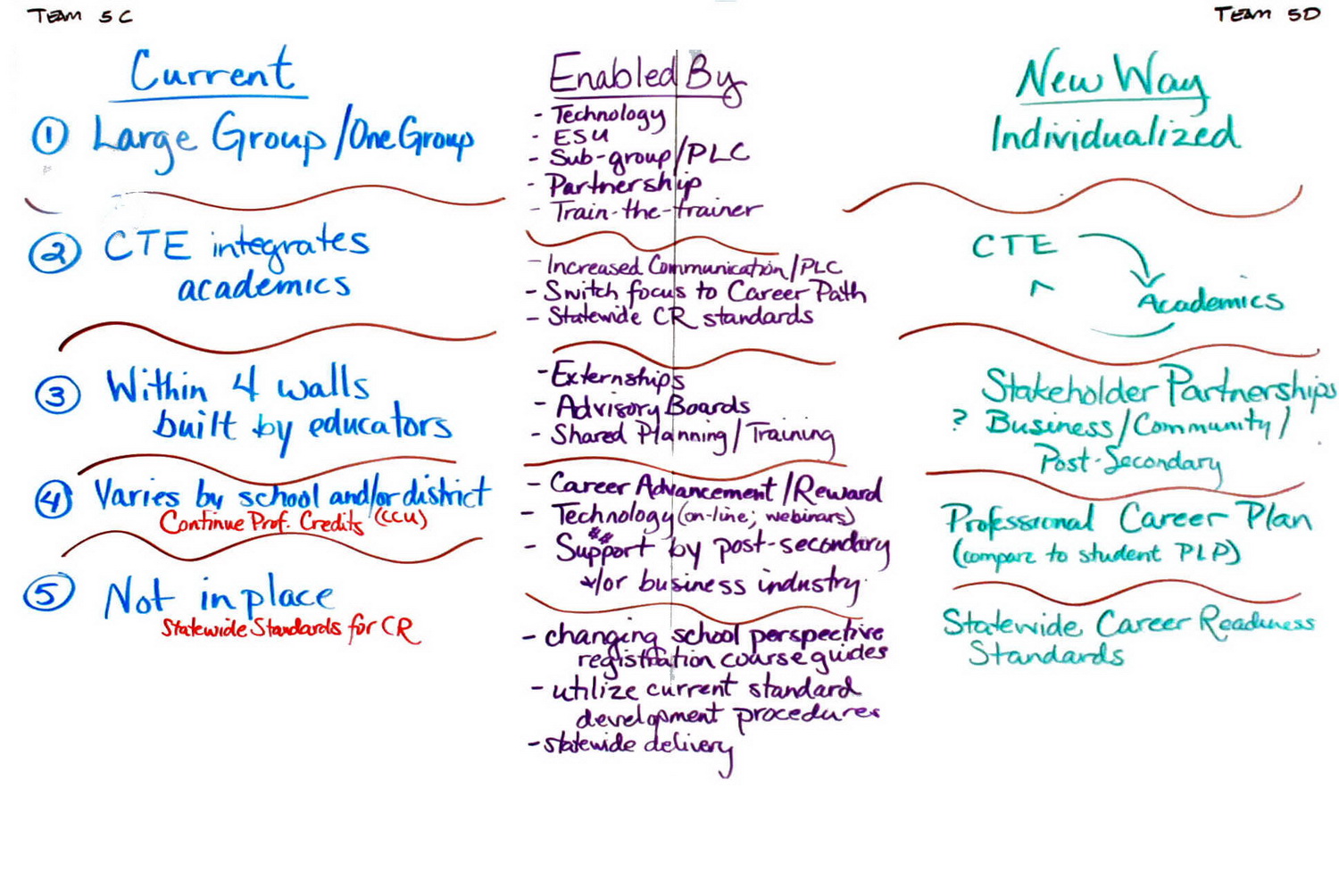
We want to individualize professional development through technology, subgroups and partnerships.
We should integrate career readiness across the academic curriculum as well as the other way around.
We need to expand our professional development to include partnerships, externships, advisory boards and shared training with business, the community and other stakeholders.
We would like to develop a professional career plan for teachers (like students have a PLP). This should be supported by post-secondary organizations and business, and this should be made much easier for teachers to pursue.
We need to develop statewide career readiness standards by changing perspectives at schools and rolling out a statewide delivery model.
Context |
This activity is focused on identifying specific shifts that need to take place by 2015 in various organizations, processes, and stakeholder groups. Each group is being given a different perspective.
|
Objective |
On the white board panels labeled Part 1, answer the following question: By 2015, what are the key changes that need to take place in teaching colleges to enable an ideal system through which all Nebraskans become both college and career ready? On the white board panel labeled Part 2, create the template shown below to develop a shift paper that answers the question: What are the specific changes needed in teaching colleges to support all Nebraskans to be both college and career ready.
|
Report Out -
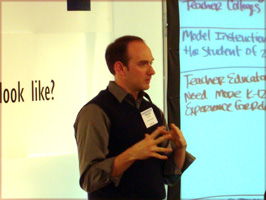
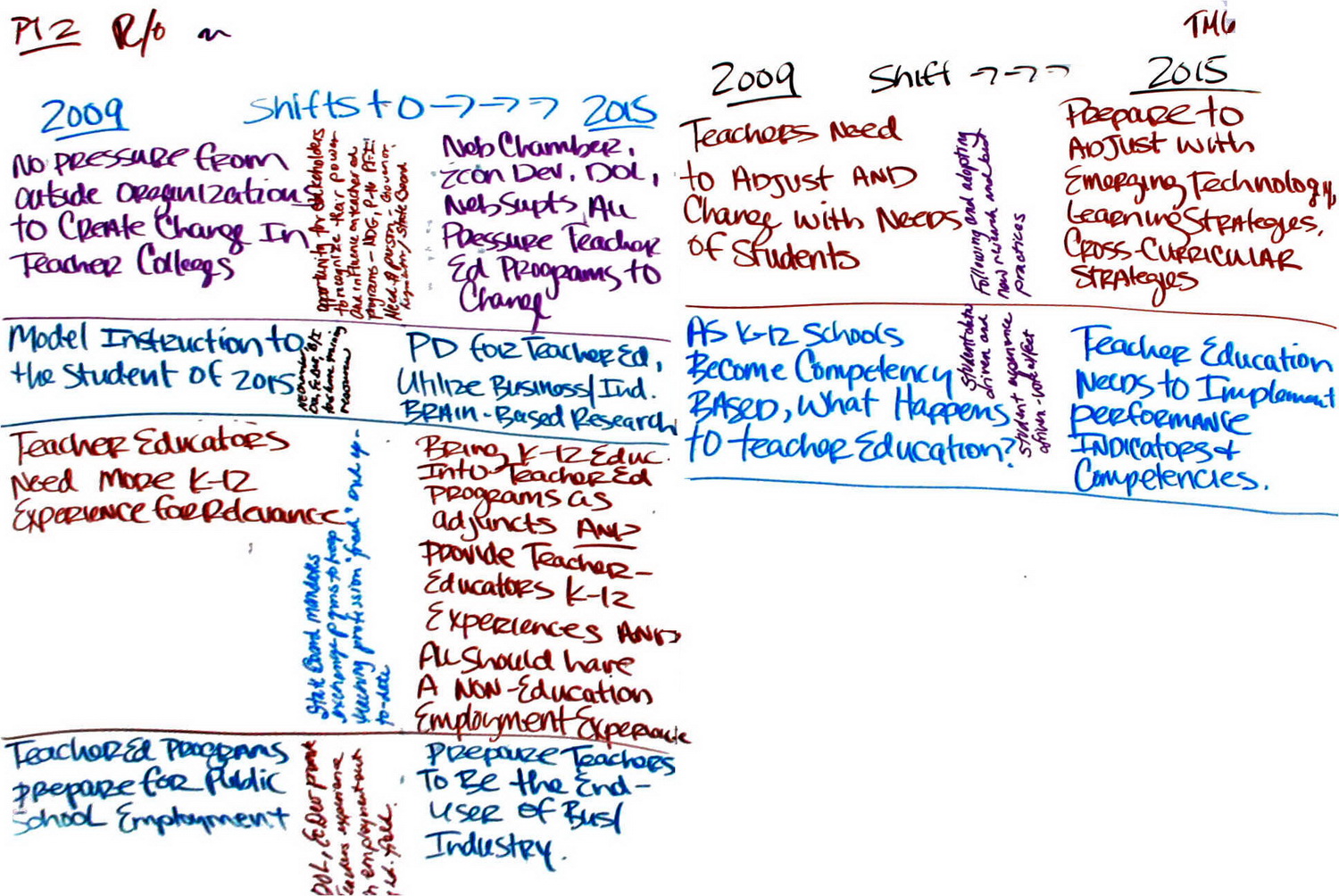
For change to take place in teacher colleges, pressure needs to come from outside organizations like the Department of Labor.
Teacher educators need to get more experience outside the academic walls, and more experience in the K-12 world.
Teachers need to be more aware of the needs of business and industry - that is the end user of their students.
Teacher education must change in response to competency-based models for K-12 education.
Teachers need to adjust their approaches to changes in students, needs and technology.
Team Seven - Department of Labor
Context |
This activity is focused on identifying specific shifts that need to take place by 2015 in various organizations, processes, and stakeholder groups. Each group is being given a different perspective.
|
Objective |
On the white board panels labeled Part 1, answer the following question: What are the key policy and practice changes that need to take place at the Department of Labor by 2015 to enable an ideal system through which all Nebraskans become both college and career ready? On the white board panel labeled Part 2, create the template shown below to develop a shift paper that answers the question: What are the specific policy and practice changes needed in order to support all Nebraskans in being college and career ready.
|
Report Out -
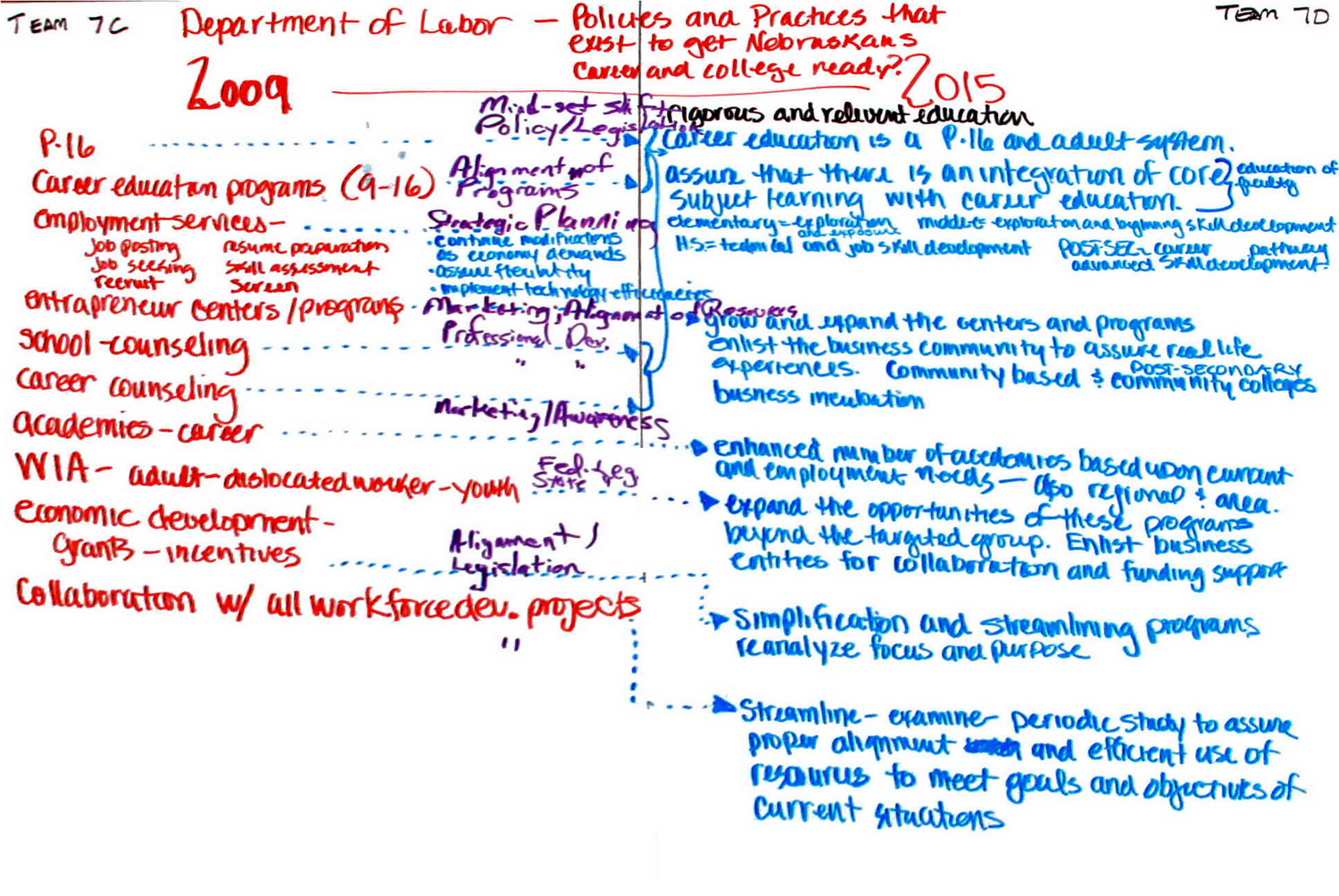
We talked about how a number of existing Department of Labor programs could be changed to have a greater impact by 2015.
We need to deal with policy alignment, strategic planning, state and federal legislation. We need to sell a lot of these ideas throughout our partnerships outside of our agency. We can streamline and simplify ourselves, but a lot of the change will involve deep collaborations with partners.
We explored the idea that career education could exist throughout the P-16 continuum.
Team Eight - Department of Education
Context |
This activity is focused on identifying specific shifts that need to take place by 2015 in various organizations, processes, and stakeholder groups. Each group is being given a different perspective.
|
Objective |
On the white board panels labeled Part 1, answer the following question: What are the key policy and practice changes that need to take place at the Department of Education by 2015 to enable an ideal system through which all Nebraskans become both college and career ready? On the white board panel labeled Part 2, create the template shown below to develop a shift paper that answers the question: What are the specific policy and practice changes needed in order to support all Nebraskans in being college and career ready?
|
Report Out -
We represented the Department of Education, but we didn't have anyone on this team who actually works at the Department of Education. Some of these requests might already exist.
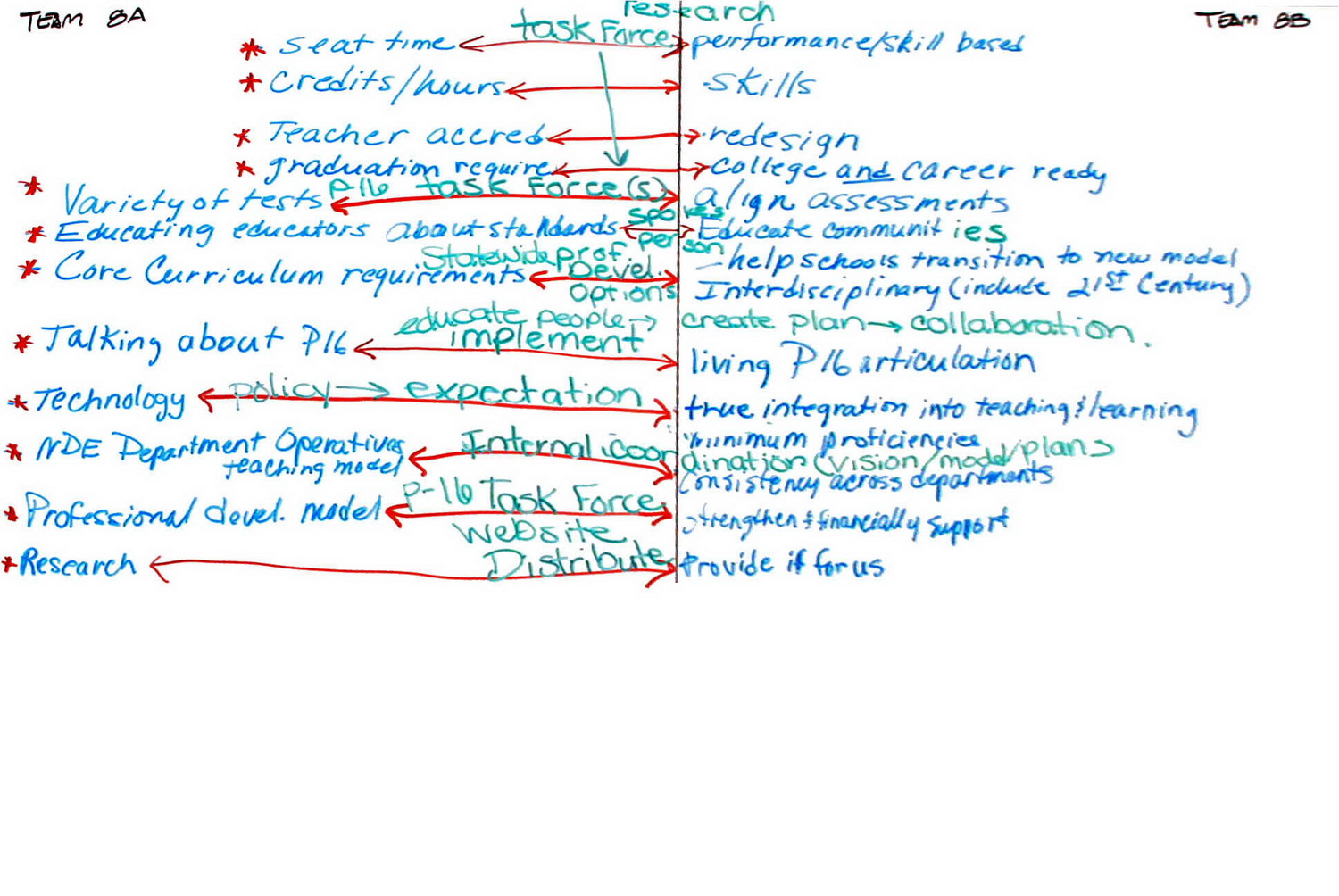
We want to shift from seat-time to performance-based education, and from credit-hours to skills.
We need to develop task forces to do thorough research into how to implement all of these big changes that we're talking about.
We want to align our assessments.
We need to educate not only legislators, but also much larger communities throughout the state about what career readiness is all about.
We need to balance statewide professional development models with local and individual choices.
We need to live the P-16 articulation, and this will require education and collaboration.
We need to communicate how all of the different pieces of the education program fit together.
We should put all of the great research that the DOE does on the website to make it available to school districts. This all requires a lot of resources, we know.
What comments do you have about the body of work you've accomplished today?
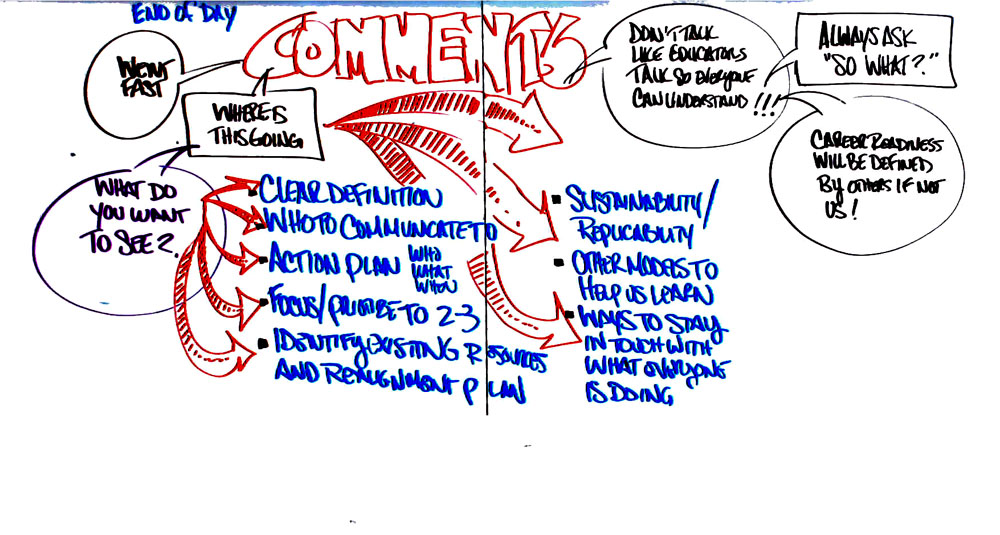
It went fast. Where is it going to go next?
What conversations do we need to have tomorrow so that we have something that can live on?
We need a clear definition of career readiness. We need to understand who our stakeholders are and how we are going to communicate with them. We need an action plan - who is involved, what they're doing and when, and how they'll measure success. We need priorities and focus. We need to make sense of the existing resources that are already available.
Sustainability - how do we keep this going? Are there other models that we could observe outside of the state of Nebraska?
Let's develop a plan for the stakeholders here to continue to collaborate going forward.
For those of you who will not be back tomorrow, what messages do you have for the people who will continue this work?
Don't use the jargon of education -- explain what you're doing, why you're doing it, and what the ultimate benefits will be.
Career readiness will be defined -- it's up to us to define it in the way we want. Think about the business owners that you know -- if we will not have business owners with us tomorrow, let's remember to filter our ideas through the perspective of those people we know. Let's filter everything that we develop tomorrow through the question "So what?" That will help us define the ultimate benefits.